Pages

Wednesday, August 1, 2012

Spikes Around the World

Spikes. You know them, you love them, you hate them, nearly every platformer out there has them. But just why are spikes so popular and in just how many ways are they used? Well, let's look at the types of spikes out there first.

Instant Kill: These are the type found all over the place in older platformers, but they are still probably the most common type even today. Touch them with even a single pixel from any side and you're dead. Even invincibility won't always save you from these things.

High Damage: This is the kind found most commonly in action adventure games like La Mulana and Castlevania games starting from Symphony of the Night. While instant kill spikes are suitable for games such as Mega Man where levels are short and checkpoints are frequent, spikes which deal large amounts of damage, but allow some room for error are more suitable to games which aren't divided into separate levels and/or have significant stretches of time between checkpoints. These are also found in 'easier' platformers, such as the Kirby series.

Low Damage: The last type of damage, and probably the least common amongst spikes. Spikes found in Metroid games and RPG's tend to deal small amounts of damage, although low damage spikes can be found in many other games as well. Generally, spikes deal low damage either because they are just another way of wearing the player's health down alongside normal enemies, such as when they appear in RPG's, or because they are placed in a room containing enemies which are more than happy to knock the protagonist into them over and over.

Why yes, the screen below this one DOES end in a spike-filled pit.


'Falling' Spikes: Plenty of spikes fall. These often are a slightly different color from spikes around them and may be hidden amongst stalactites or even be stalactites. This type rarely is of the instant kill variety, but they often are mixed in with pits and spikes of the more lethal variety. Spikes don't just fall down though and can fly across the screen from any given direction, sometimes from multiple directions at once.

Spike Wall: This type of spike has quite a bit of variety to it. Sometimes a boss will need to be forced into a spike fall to damage it, sometimes an enemy will try to do the same to you, or sometimes it's simply there as a fancy way of blocking progress or making vertical platforming much harder. Of course, some spike walls also move to create a more deadly auto-scrolling level; such moving spike walls may also shoot out spikes periodically at the player for added fun.

Natural Spikes: These are spikes which are a 'natural' part of an enemy, although the enemy itself may be organic or robotic. Spinies, frequently tossed by lakitus in Mario games, and Metroid's Kraid are two of the more recognizable examples of this. Such spikes may only be for the sake of appearance, may be projectiles, or may deal more damage when touched than other parts of the enemy.

Platform Spikes: Mega Man games usually love placing a chain of these in at least one level. These are spikes which occupy one side of a floating platform while the platform itself flips either at timed intervals or shortly after the player jumps on it. These are rarely a direct cause of death, but they may frequently punish players by knocked them into pits and can often appear alongside low-damage enemies specialized in knocking players off platforms.

Direction-Specific Spikes: These are pretty rare, but they seem to be catching on. I personally love these and will likely post an article about them specifically in the near future. These spikes usually damage players when landed on from above, but can be safely walked through when approached from the side. They are usually placed as a way of blocking access to a passage from one direction while allowing access from another; this type is also usually of the high damage variety, so if a player falls into a spike pit he or she suffers a harsh penalty, but can safely walk across the rest of the way.

Fake Spikes: And of course some spikes are simply not spikes at all. Either a few hits will knock them away or they are simply an illusion which can be safely walked on or through. f the only form of progress seems to be blocked off by spikes, they are probably fake and the only way to tell for sure is likely to take the risk and jump into them. Fake spikes can be a fun trick if implemented properly, but more often than not they are simply an annoyance.

While there are likely dozens of other spike varieties out there, these are amongst the most common ones. In the next installment of Spikes Around the World, I'll be taking a look at some of the reasons for why spikes are frequently favored over other environmental hazards.

Friday, July 27, 2012

Making a Game

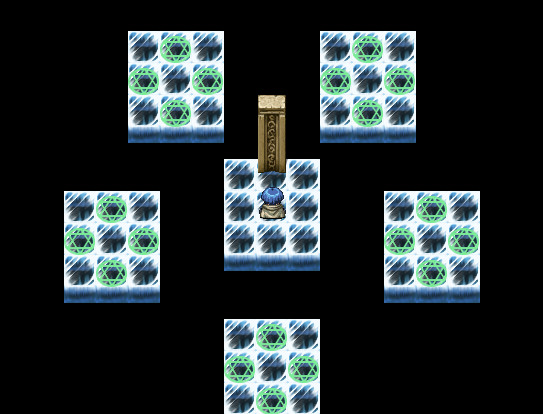
I've signed up for a 3-week mapping contest at rpgmaker.net and it turns out that making a game, even one that doesn't require any real programming, takes quite a bit more time than actually playing one. While the contest still has nearly three weeks remaining, I've been spending pretty much all of my free time working on the game to get it finished as soon as possible and I'd say it's around 35-40% done. Here's some screenshots of what I have so far:


This setup looks cliche, but the puzzle here is a bit different.
The place in this screenshot is one of the first secrets in the game.


The only rules of the contest are that it has to all take place on one map and it has to have a 'dungeon' theme, but the word 'dungeon' is up to individual interpretation. The contest only takes aesthetics into account, but my entry is going to have a heavy focus on puzzles and storytelling; my entry probably won't stand a chance of actually winning (there's no prize though), but I'm having fun making it and I'll post a link to it on here when it's finished and the contest is over. I'm drawing heavily on La Mulana and Dark Souls for storytelling and puzzle techniques with an in media res-style of storytelling where the player is never blatantly told the full details, but where the puzzles work to flesh out the story.

Here's a link to the contest topic: http://rpgmaker.net/forums/topics/11454/

Tuesday, July 24, 2012

Pause Menu: Fraxy Boss - Palenque

So, Fraxy is a fantastic game/engine/thing for anyone who likes any type of shoot-em-up. I'll do a detailed recommendation of it soon enough (and likely do one for Knytt Stories too), but the best way to sum it up for now is to say it is an extremely flexible engine which lets you make and fight shoot-em-up bosses which can range anywhere from Gradius-style shoot the core bosses to Touhou levels of bullethell to outright stages.

Right now though, I'm just going to go ahead and recommend a specific boss for everyone to try out, Palenque. Palenque was originally the boss of the sixth area in La Mulana (and in turn is based off of a real-life mural) and, unlike other bosses in the game, the fight against him plays out sort of like a shoot-em-up. Even so, the Fraxy remake of this fight is remarkably well-done and is really fun to play through, especially since it changes around the boss's hitbox and which parts of the ship deflect bullets to better fit Fraxy's gameplay. The Fraxy version even adds an entirely new second phase to the fight which is substantially harder and is loaded to the brim with special effects. Here are some comparison screenshots:

La Mulana
Fraxy 


Here are a few relevant links:
The latest version of Fraxy can be found here: http://monz.sp.land.to/wp/fraxy/
A gameplay video for this boss and the download links can be found here: http://www.youtube.com/watch?v=XeKmODn0jL8
The Wikipedia article related to the original mural can be found here: http://en.wikipedia.org/wiki/K%27inich_Janaab%27_Pakal

Hey I'm on YouTube!

I just thought it might be a good idea to let anyone know that I have a YouTube channel as well. At the moment it's just my personal one so there are a few videos of video games on there not related to the blog, but once Penultimate Boss expands more I'll probably make a blog-specific channel for it and reupload any relevant videos there. I'm still new to the video editing process, so please bear with me if the recording quality is not perfect (I do have a registered version of Bandicam though, so there are no watermarks at least aside from on some earlier videos).

Since I recently finished the remake of La Mulana, I went ahead and uploaded videos of two of the bosses, which are both really fun fights with great music. One of these bosses also ties in with the message above this one.

My channel can be found here: http://www.youtube.com/user/Seeric/videos

Monday, July 23, 2012

Pause Menu: Lessons on Puzzles from La Mulana

The remake of La Mulana is amazing and the puzzles are probably its best feature. Puzzles are also probably its worst feature. I'll start with what works.

La Mulana's puzzles are awesome mainly for two reasons. First, they integrate themselves directly into the plot, a gameplay decision which painfully few games do. By the end of the second dungeon, players will have a basic understand of who 'Mother' is as well as of the history of La Mulana and some of its past inhabitants. Almost all of  this information is gained without any dialogue and instead is found on stone tablets throughout the ruins with the names of places and people being vital to solving puzzles; not knowing why the nine giants divided into two factions and exactly which one is which can prove both costly and outright deadly. This 'puzzle-based storytelling' takes advantage of the interactive strength of video games as a medium and, like flavor text, streamlines the experience by fleshing out the world and characters without relying heavily upon awkward exposition; Fez uses this same method of storytelling with its puzzles to the point that players learn an entirely new alphabet by the end and this is hopefully a trend which will catch on in the future.

The second reason La Mulana's puzzles are awesome is they tend to function like actual puzzles. In many games, 'solving' a puzzle usually requires simply finding the right item to use. At best, this approach creates puzzles which require a few seconds or a minute of thinking to arrive at a solution and then a significantly larger amount of time executing the plan. At worst, this leads to the problem many adventure games suffer from of the player blindly flailing around trying to combine every item and use every item everywhere. This is not to say that La Mulana does not have its share of (usually clever) block pushing puzzles and item fiddling, but the majority of puzzles in the game simply ask players to use skills they already possess in order to forge a path with most puzzles consisting of hunting down and mentally combining the dozens of vague clues scattered throughout the game. As a result, puzzles require a large amount of thinking outside the box and players can get stuck on a puzzle for hours, but it is astoundingly satisfying when a mysterious clue from much earlier in the game suddenly becomes relevant and everything clicks into place.

Unfortunately, La Mulana also has some major issues with its puzzles. Probably the biggest issue is simply that very few of the puzzles are optional and, very much unlike Fez, there are many moments where, despite the seemingly open appearance, one or two puzzles absolutely must be solved in order to make any sort of progress. This wouldn't be horrible on its own, but La Mulana gives no indication as to if a room still has 'important stuff' in it and, since two vague clues in two entirely different areas are relatively frequently expected to be used together in order to find a puzzle solution somewhere else in order to unlock something in yet another area, there are several moments, especially near the end, where it becomes a matter of either resorting to a guide or asking a friend for help or wandering around for several hours looking for a clue or just the proper room for solving a puzzle, let alone actually figuring out exactly what to do.

As an example, one of the later puzzles in the game involves getting to a closed off part in one region in order to modify a different region, but in order to get to this closed off area players must interact with a pot in a third area which looks like every other pot in the area in which it is found; there is a clue for this, but what the clue doesn't say is that this is the only pot in the entire game which must be used like a pipe from a Mario game by standing on top of it and pressing down. So, in this case, even if a person understands the clue, breaking the pot causes nothing to happen and a player may think that he or she was simply wrong and go look for a solution elsewhere. This is just one example, but there are many such puzzles where a player can understand a clue, but simply interact with the indicated object or room incorrectly and, since there is no indication that they are 'on the right track', it is all too easy to get the impression that an interpretation of a clue is completely wrong.

It is important to stress that this is not a problem with obtuse and/or multi-step puzzles, it is a problem with conveying basic information. Fez, the Metroid series, and many other open exploration games have various ways of informing players of if a room is 'completed' and/or if something important is still present, La Mulana plays a noise after the player solves 'something' and any time saved by not relying upon messy exposition and dialogue is more than made up for by the sheer amount of time players will inevitably spend endlessly backtracking just looking for what they need to do. Clues also frequently refer to room names or to the names of statues found in specific rooms, but again there is a lack of information as players can only ever see the name of the room they are currently in (and even then must interrupt play by pressing the pause button and bringing up the map); the lack of a way to look at the names of previously-visiting rooms, let alone after acquiring area maps, is simply a sloppy and tedium-inducing decision as it leads to either pausing in every single room to write the name down for future use or systematic backtracking through every unlocked area in the game, which still leads to constantly pausing to see room names.  Vague clues and clues which don't pay off until significantly later in a game are great, a complete lack of basic information-related features like being able to scroll through room names and a simple binary system for if a room is 'completed' or not is not so great, especially in a game as expansive and backtrack-heavy as La Mulana.

In the end, La Mulana is generally a great game with engaging and clever puzzles which successfully link plot and gameplay, but its frustrating moments serve as indications of how important it is for any non-linear game to convey general, overarching information.

Saturday, July 21, 2012

An Update on Non-Updates

So, I haven't posted anything here for about a week and, while I certainly do not yet have anything resembling an established community for this blog, it would be good to let anyone stopping by know what's going on.

One thing that's been going on is I've been writing reviews for the National Game Development Month (NaGaDeMo) Review Drive at rpgmaker.net and both writing the reviews and playing the actual games takes up a fair amount of time. Since the games I have been reviewing are demos and generally need some polishing up, I have not been posting about them here, but the bottom of this post will have a link to my reviews for anyone interested.

The second reason I haven't been updating much this week is the English remake of La Mulana launched recently and I have become rather addicted to it. The remake of La Mulana costs $15, so I normally would not post about it here since I'd prefer to limit this blog to entirely free games, but it is worth noting that this remake has some massive changes in it which go far beyond the aesthetics, so even people did not care for the original version (myself included) may still get a lot of entertainment out of the remake.

This means that any posts made in the usual fashion this week would have probably been shorter than usual and not as detailed, so I would be rather unhappy with them. However, starting tomorrow I will introduce a new post category called Pause Menu, so that there is at least something for when I do not have the time to play through and write about recommendable free games. Pause Menu posts will probably end up being just as lengthy as usual, but some may also be much shorter and they will not stick to the usual categories. For example, a Pause Menu update tomorrow will likely be about the remake of La Mulana even though it's not a free game. Pause Menu will also have the potentially nice effect of leading to the permanent implementation of more weekly topics to add some more variety.


Link Time!


My reviews of RPG Maker games can be found here: http://rpgmaker.net/users/Seeric/reviews/
There are still games in need of reviews by August 15 for the NaGaDeMo Review Drive, if you want to help out or just check out more reviews and games, go here: http://rpgmaker.net/events/nagademo_review_drive/ 
If you want to check out the remake of La Mulana, you can find it here: http://la-mulana.com/en/

Monday, July 16, 2012

The Wonders of Flavor Text

I've frequently commented on flavor text in Game Alerts, so I figured it's about time to take a look at why it is such a nice thing for a game to have. Flavor text is most commonly associated with RPG's and action RPG's, but it can be used in any game with an inventory system or interactive environments or sometimes even menu options, so it can really be used in games of any genre, such as with the trophies in Smash Bros. games and planet descriptions in Meteos.

Flavor text also can have a wide range of uses, such as added a bit of humor to an otherwise serious game or supporting an existing lighthearted tone, such as in pretty much anything made by Nippon Ichi, while more serious flavor text can be used to make individual items sound more awesome, such as describing the history behind a demon-slaying sword, or even outright giving useful background information instead of trying to fit such information into clunky exposition scenes, such as with Dark Souls.

However, the largest general reason to utilize flavor text is it makes tasks seem 'worth doing'. Reading the stats or use for an item in its description is often vital for determining just what an item does or if a piece of equipment is an upgrade, but flavor text concerning any given item can make an otherwise bland task interesting in addition to indirectly expanding upon the game's world as a whole. Furthermore, as I have mentioned in previous posts, the main strength of video games comes from 'touch' and interaction with environmental objects not only shows that a designer has put effort into a game, but also adds plenty of variety to the world; one of the most disappointing things in any game is to reach a library in an RPG and either get the equivalent of "nothing interesting is on the shelf" for any given bookcase or, worst of all, simply not being able to interact with the books all around the room.

In addition, many RPG's, and sometimes games from other genres, have useful items hidden in objects such as barrels, pots, clocks, fireplaces, and all sorts of other things, but getting no feedback or a bland "it's empty" message on most objects can make item hunter feel like a chore. Putting unique flavor text on many objects which players are likely to search when looking for objects not only makes the item hunt less of a chore, but comments made by the protagonist or between party members can go a very long way towards making likeable characters with well-established personalities and relationships without needing to rely upon awkward exposition dialogue.

So, to sum things up, flavor text is useful because it:
1) reduces the need for clunky exposition
2) compliments the overall tone of a game
3) helps to establish characters and character relationships
4) expands upon a world's lore
5) makes tasks such as item hunting and stat checking feel fun instead of tedious
6) increases the overall amount of things to do in a game
7) shows that a developer actually cares about his or her creation

For examples of free games which use flavor text to great effect, check out the Game Alerts for Intelligence and Star Stealing Prince.